

How to fix book publishing
This is the 307th edition of SHuSH, the newsletter of The Sutherland House Inc. If you’re new here, press the button—it’s free:
Sutherland House is always happy to receive submissions of manuscripts or proposals for nonfiction books. If you are looking to get published, contact submissions@sutherlandhousebooks.com. Agents welcome, but no agent required.

Introducing the Canadian Planner 2026!
We noticed last year that virtually every planner available in the Canadian market has generic or American holidays and content, so we made a new one. Welcome to The Canadian Planner 2026!
Plan your days on the world’s only uniquely Canadian planner. Stay organized, informed, and Canadian every day of the year.
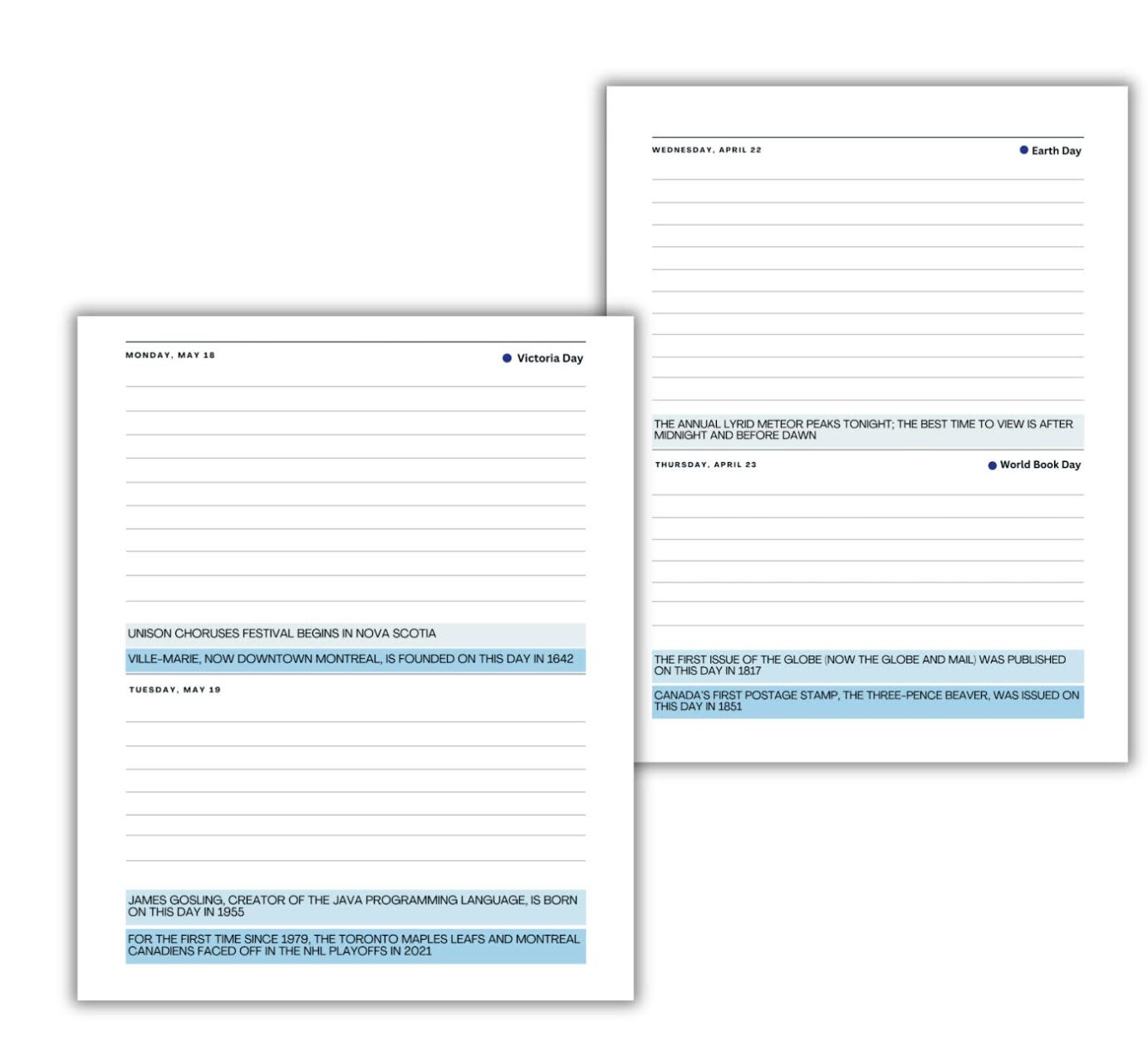
This elegant, thoughtfully designed planner is an indispensable companion for staying on top of your busy life and celebrating where you’re from. With two days per page, a clean layout, and generous space for appointments, notes, and to-dos, it keeps you focused and productive. Sprinkled throughout are:
key national observances
public holidays and civic observances
famous birthdays and historical notes
major arts, culture, and sports events
natural and astronomical occasions, weather highs and lows, and even bird migration and fruiting seasons.
Beautifully packaged in faux leather with silver foil accents and a ribbon marker, the Canadian Planner is the perfect way to stay organized and connected to all things Canadian.
It’s 6x9 inches, 224 pages, and available in blue or black and sells for just $19.95. Order one here! For bulk orders email timo@sutherlandhousebooks.com.
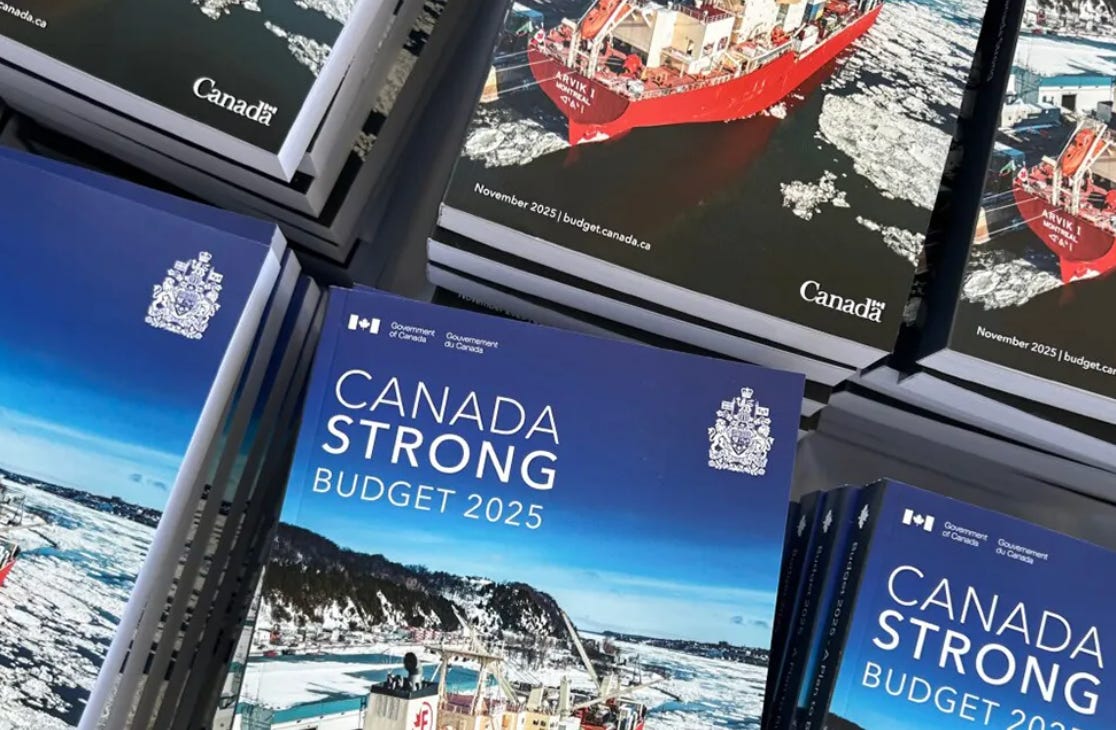
You might have noticed that last month’s federal budget introduced a whack of new cultural spending. The CBC got another $150 million, the Canada Music Fund took $48 million, film and television raked in over $300 million. Books? Nothing.
The budget’s rationales for this new spending are to foster a sense of cultural identity and belonging in Canada, to sustain an informed citizenship, and to protect vulnerable industries. The unwritten context is the recent American assault on Canada’s independence. You would think there would be room for books in this sort of budget. Is there anything more foundational to Canadian identity and an informed citizenry than books by Canadians and about Canada?
Yet somehow our political leadership overlooked the literary sector. It’s odd. The first thing our politicians do when they want to explain or advance their own careers is knock on a publisher’s door.
Granted, it’s usually the door of an American publisher, because the net result of our government’s efforts to nurture the publishing sector in Canada over the last several decade has been to drive Canadian-published books from more than 20 percent of those sold in Canada to less than 5 percent. We have the weakest domestic publishing industry in the developed world. Our prime ministers think nothing of taking their books to New York-based Penguin Random House or Simon & Schuster. Most of our most prominent fiction writers give all their North American rights to US publishers instead of separating out Canadian rights and leaving them with a Canadian publisher. It’s a travesty.
I have a solution. In fact, I have many solutions. I have a whole book of solutions coming in January from Canadian public policy guru Richard Stursberg. It looks like this:

Richard’s solutions are not the same as my solutions. I like his, too. I’m not picky. I’m going to flood the zone with solutions and hope people in Ottawa wake up to the fact that we have a problem. The solutions will almost all involve more public support of the industry, not because I’m keen on public support of the industry, but because we have ample proof that the alternative to more public support is no domestic book publishing industry. Also, if you’ve been following us here (see SHuSH 232, The Wasteland), you know this is a “you broke it, you own it” moment for our federal government.
So here’s my solution de jour. Given that books are fundamental to any notion of Canadian identity, given that our domestic publishing sector is pathetically weak, given that any self-respecting country needs to be able to publish its own stories rather than rely on the branch plants of an increasingly difficult neighbour to do it for us, we arrange the following.
We massively expand Canada’s public lending right program (PLR). At present, the ridiculously underfunded PLR pays out about $15 million a year to some 20,000 authors whose books are circulated in Canada’s public libraries. The distributions are based on a complicated formula that mostly notices how many libraries hold the author’s book. It’s capped at $4,500 an author, and most receive only a few hundred dollars annually.
We expand the PLR’s spending envelope by a factor of ten: $150 million. Does that sound like a lot of money? It’s not. It comes to about $3.75 per capita. That’s about a tenth of what we spend annually on the CBC, which employs roughly the same number of people as book publishing. It’s about a tenth of what we spend in direct funding and tax credits on film & television. It’s less than half what we’re spending on newspaper and magazine subsidies. A small price to rebuild a decimated publishing sector.
I think you could argue that the dollar amount should be much higher. As a society, we believe that books are more important than the products of other media. The governments don’t give you free cable or a free opera pass or a free spotify subscription: they give you free books through public libraries, because books are that important to the well-being of our citizenry. We’re so good at promoting the value of our public libraries that four out of every five books read in Canada are borrowed rather than bought. If books are that important, $150 million is a bargain.
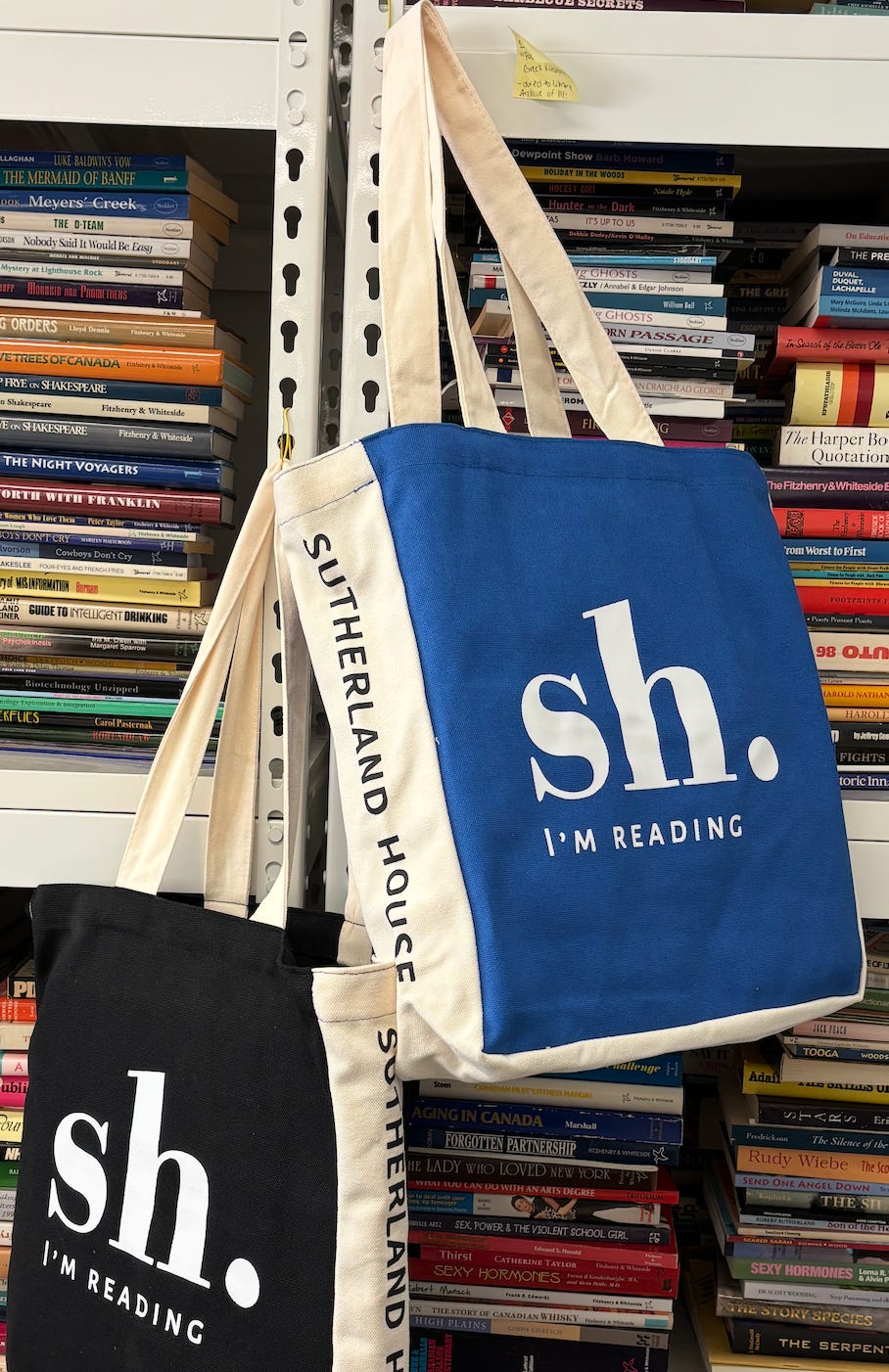
We’ve got a new totes!
Just in time for Christmas, we’ve got a new batch of Sutherland House’s first ever tote bag. It’s fine heavy canvas, and it’s got a bottle holder inside. Dimensions are 39x36x12 cm. It sells to SHuSH readers for $15. To order, email Timo@sutherlandhousebooks.com.
Next, we change the goals of the program and the terms on which the funds are distributed. In addition to supporting author incomes at a higher level, we want to reinforce Canadian ownership of the publishing industry, and we want to do it without harming libraries.
So the first 10 percent of the program stays as is: $15 million to any and all authors based on how widely their books are held in public libraries. We’re not taking away any funds from people who are receiving them now. The rest of the funding—the additional 90 percent—goes entirely to books published with Canadian-owned publishers. It is split by the authors and the publishers, say two-thirds to authors and one-third to publishers. Cap this portion of the funding at $40,000 per author.
The result would be to increase the value of the PLR for Canadian authors working with Canadian publishers from a few hundred dollars to somewhere in the range of $5,000 to $40,000. It would be transformative for author incomes, which according to the Writers’ Union of Canada average an appalling $12,879. We’ve effectively de-professionalized authorship in Canada. This is the correction.
For the first time in a generation, publishing with a Canadian house will come with a major financial upside, rather than a financial penalty. The multinationals, which make most of their money selling foreign books into our market, would likely pay the highest advances to Canadian authors, as they do now (which is why our politicians and successful audiences publish with them). But the improved public lending right would level the playing field. It would be enough to tip the scales for many writers who currently feel they have no choice but to sign away their Canadian rights to a multinational.
The third of the new funding that goes to publishers would allow them to be more competitive with their advances while improving their ability to professionally edit, design, print, and market their works. I wouldn’t object to the publisher’s share going entirely to advances, if that’s in better keeping with the spirit of the PLR as a tool for author compensation.
Nothing in this proposal affects library budgets or acquisitions. Libraries remain fully independent. This just ensures the creators and publishers behind the books Canadians are borrowing get paid. At the moment, we’ve socialized our book consumption; we just forgot to socialize the costs of book production. Library book purchases and a paltry public lending right are nowhere close to adequate compensation for the makers of books.
There are details to be ironed out, but the public lending right program is already legislated. It’s already administratively functional and socially legitimate, and it’s shielded by the cultural exemption of the Canada-US-Mexico trade agreement. I suppose the Americans might complain if the PLR were massively increased and they were excluded, but when the top ten book publishers in this market are all US-based, I don’t think they’d have much of an argument.
The people in the Department of Finance might think this too much an increase for too small an industry, but, again, publishing employs as many people as the CBC (and would, in this scenario, employ a lot more). There’s also much to be gained by keeping our most valuable intellectual property in Canada, and the books themselves are highly exportable.
If, in this way, every Canadian book published by a Canadian-owned publisher and held in a public library generated real income for the people who create and publish it, the entire Canadian-owned publishing sector would become viable overnight. And it would likely do a great deal more for social cohesion and informed citizenship in Canada than any of the spending announced in last month’s budget.
Don’t like this solution? Stick around. Many more to come. And if you have a better idea, press the comments button below.
Give A Thoughtful Gift
As a SHuSH subscriber, you are eligible for this spectacular holiday offer: buy a gift subscription to Sutherland Quarterly (or treat yourself) and we’ll send you the Sutherland House book of your choice at no charge.

Launched in 2022, Sutherland Quarterly is an exciting new series of captivating essays on current affairs by some of Canada’s finest writers, published individually as books and also available by annual subscription—four great books a year, mailed to your door, for just $67.99. Subscribe now at sutherlandquarterly.com and we’ll immediately be in touch to send you the free book of your choice.
Sutherland Quarterly is also pleased to announce its latest edition. Sign up now and begin your subscriptions with Mark Leiren-Young’s Greener Than Thou:
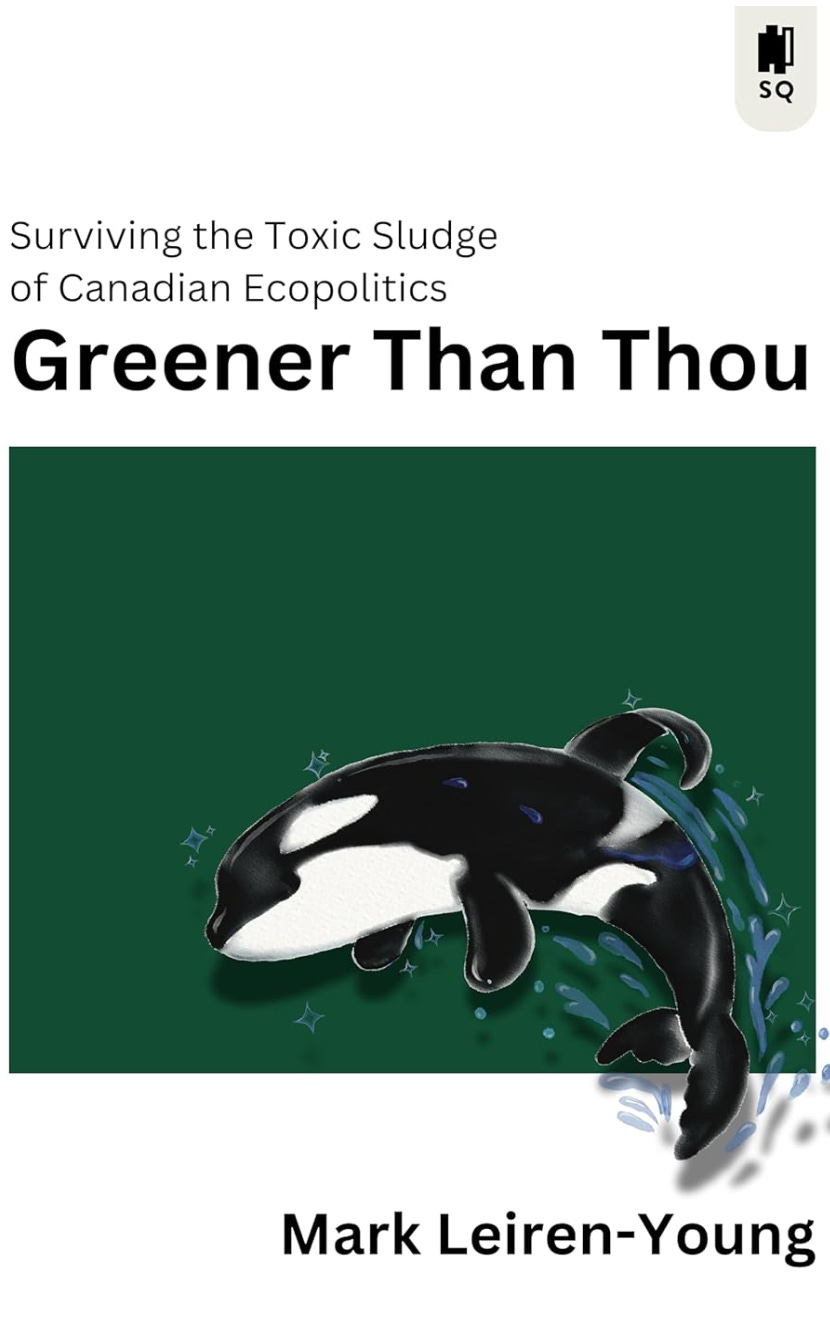
A hilarious romp through the past, present, and future of Green politics in Canada.
Mark Leiren-Young, a lifelong environmentalist and Leacock Medal-winning humour writer, journeys to the heart of greenness to reveal the toxic sludge of Canadian eco-politics.
For a brief moment in 2019, it looked like Elizabeth May’s Green wave could change Canadian politics and finally wield real power in Ottawa. During that brief moment, Leiren-Young was a campaign manager in a riding the federal Greens were sure to win. He quit on discovering that there was only one thing stopping the Green Party of Canada from changing the country’s electoral landscape forever: the Green Party of Canada.
The Greens were not ready for prime time. Or late night. Or four a.m., after last call, when voters stop being picky and are desperate for anyone with a nice smile. Once the spotlight hit, the Greens wilted, never to recover.
A comedic take on the sorry state of Canada’s environmental politics, Greener Than Thou explores how the Green party has repeatedly shot itself in the foot, blasted out its kneecaps, and done everything in its power to ensure it will never have a say in decisions that shape the future of our planet.
Thanks for reading. Please either:
Our Newsletter Roll (suggestions welcome)
Banuta Rubess’s Funny, You Don’t Look Bookish, reviews five books a week.
The Bibliophile from Biblioasis, an independent publisher based in Windsor.
The Literary Review of Canada’s Bookworm, “your weekly dose of exclusive reviews, book excerpts, and more.”
Art Kavanagh’s Talk about books: Book discussion and criticism.
Gayla Gray’s SoNovelicious: Books, reading, writing, and bookstores.
Esoterica Magazine: Literature and popular culture.
Benjamin Errett’s Get Wit Quick, literature and other fun stuff
Lydia Perovic’s Long Play: literature and music.
Jason Logan’s Urban Color Report: adventures in ink (sign-up at bottom of page)
Anne Trubek’s Notes from a Small Press: like SHuSH, but different
Art Canada Institute: a reliable source of Canadian arts info/opinion
Kate McKean’s Agents & Books: an interesting angle on the literary world
Rebecca Eckler’s Re:Book: unpretentious recommendations
Anna Sproul Latimer’s How to Glow in the Dark: interesting advice
John Biggs Great Reads: strong recommendations
Steven Beattie’s That Shakespearean Rag, a newsy blog about books and reading
Mark Dykeman’s How About This: Atlantic Canadian interviews and thoughts on writing and creativity.
J. W. Ellenhall’s 3-Page Book Battles: Readers help her choose which of three random books to review each month.
Donald Brackett’s Embodied Meanings: “Arts music films literature and popular culture.”

Thank you so much for writing this. It's the most important piece on Canadian publishing that I've seen this year. We need to have a conversation on the issues you raised. No other developed country would put up with this situation.
You are so right about the pathetic situation. I have no idea if this is a fix or a part of a fix but the fact that books and book publishing are left out of the nation-building plans right now is beyond ignorant.