

My Dad Didn’t Read
This is the 330th edition of SHuSH, the newsletter of The Sutherland House Inc. If you’re new here, press the button—it’s free:
Sutherland House is always happy to receive submissions of manuscripts or proposals for nonfiction books. If you are looking to get published, contact submissions@sutherlandhousebooks.com. Agents welcome, but no agent required.
My father died almost four years ago at the age of ninety-five. I loved and admired him. He was a great husband and father, as good and trustworthy a man as I’ve known. But there were things about him I never understood.
For instance, he was never a reader.
It probably shouldn’t have bothered me. He’d been busy his whole life doing other things. As a young man, he was competitive in baseball, hockey, and curling. Later, he coached a couple of city-championship hockey teams and got his golf handicap down to low single digits.
He was an excellent musician, playing piano in big bands across the prairies from his twenties until his eighties. He finished his own basement, rebuilt his own kitchen, poured his own concrete patio, changed his own transmission. Once retired, he produced some truly impressive woodwork on a lathe in his garage. He’d spend months on a single piece.
I don’t think Dad was ever encouraged to read. He was raised to be good with his hands and grudging with conversation. His education ended with high school in North Battleford, Saskatchewan. Few people he knew went to university and, to my knowledge, he never considered attending. He worked his entire career for one employer, International Harvester, starting on the warehouse floor and retiring four decades later as manager of a large parts depot. He took his job seriously, but it was never more than a job to him, sufficient to support a stay-at-home wife and four children in a three-bedroom bungalow. Every once in a while he’d drop a clue that he’d wanted more of a career, but he had a modest demeanour and was disinclined to put himself forward or take chances.
There were never more than a few dozen books in our house while I was growing up, not counting Funk & Wagnalls. My mother read regularly, making good use of the public library. I think only three of our books were Dad’s. John DeLorean’s On a Clear Day You Can See General Motors and William H. Whyte’s The Organization Man were probably gifts. I don’t recall him reading either. The third was a massive Webster’s dictionary, six inches thick, with an alphabetical thumb index cut into the fore-edge. I think he’d won it in school for something or other. I don’t recall him using it, although he scowled at us kids for abusing it.
He looked at the newspaper most days, starting and often ending with the sports page. I never saw him with a magazine apart from Sports Illustrated—he subscribed for a while—and occasional issues of golf and woodworking monthlies. When I started reading seriously in my late teens and taking classes in literature at university, he was skeptical. He told me that his high-school teacher had once presented his class with a poem or a story and had declared that the text contained a subtext, some implicit meaning beyond the literal sense of the words. Dad didn’t buy it, and he remained doubtful that a writer was capable of saying, and a reader capable of discerning, more than the obvious.
For a man of broad capacities, he could be oddly incurious. He played music all his life—his personal repertoire was vast—but he seldom listened to music, even the sort he liked to play. I don’t think he ever owned more than a dozen records, all of them jazz.
It shouldn’t matter. It doesn’t matter. He always had many things to occupy him and other ways to express himself. His life was full without books. Curling bores the fuck out of me. I never watched or played it with him. We golfed together maybe twice. Families have everything and nothing in common.
Yet it bothered me that there was distance between us on things that matter a great deal to me. Much of my life has been words on paper. The things I’ve been preoccupied with as an editor and writer—current affairs, politics, history, business—mattered little to him. I’ve spent years working on books that left him cold. I know he was proud of me when they were published, but he was never going to read beyond the first chapter. I think he was slightly embarrassed that I had so many opinions on so many subjects and was ridiculously public with them (don’t blame him for that).
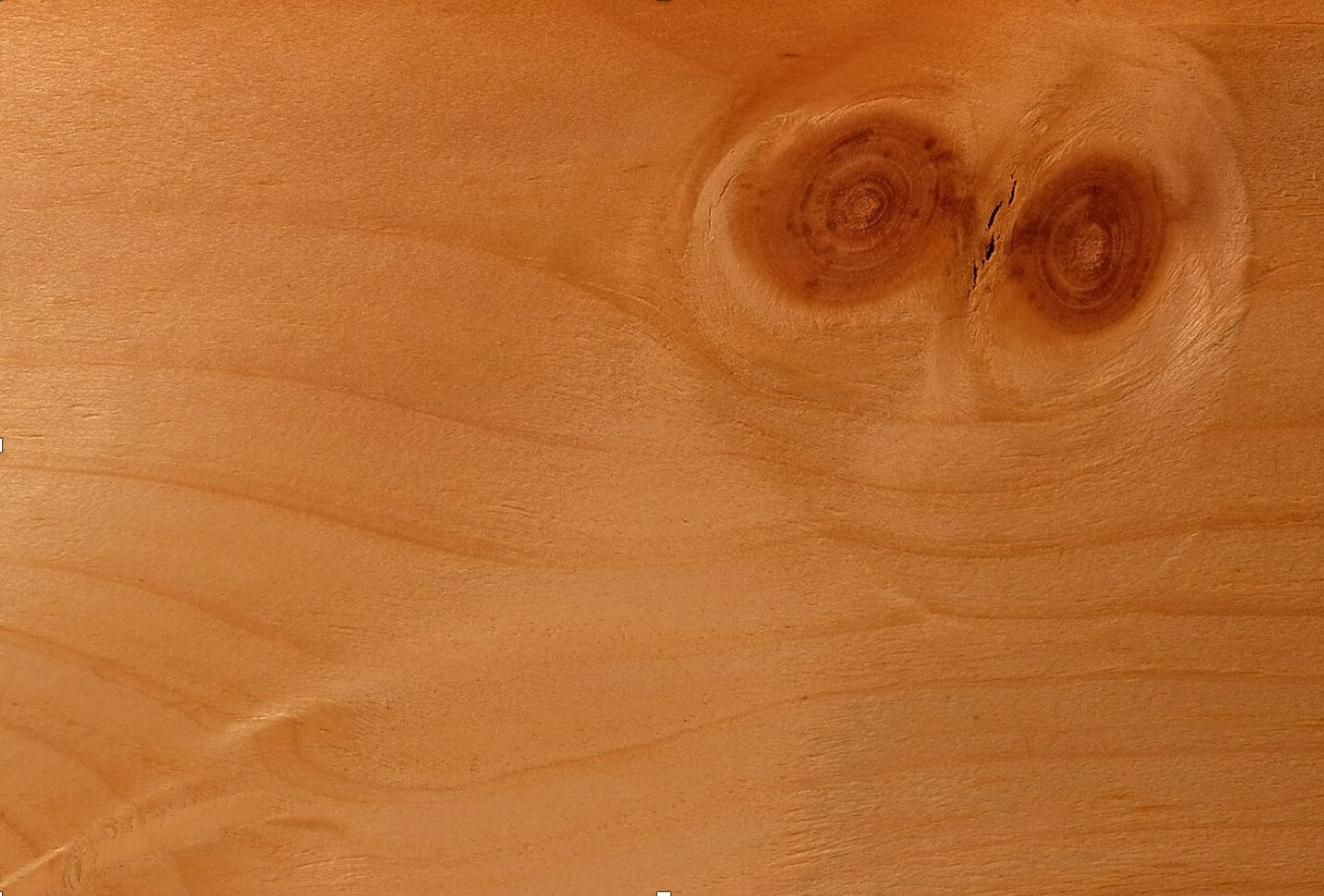
I did count one small victory. For years, I’d been suggesting that he read this book or that article, to no avail. I’d give him books, all of which were politely shelved, unread. Except one. Larry McMurtry’s Lonesome Dove. He read the whole damn thing—843 pages. I couldn’t get him to talk about it, but he’d experienced it. I felt we’d shared something and I quit pushing after that. I let him go back to reading wood grains and we met on the common ground of family, the Oilers, and things done with your hands, all of which were also meaningful to me.
Mom died of Alzheimer’s in 2019. Afterward, I spoke more frequently and at greater length with Dad. He opened up a bit, perhaps out of loneliness. He always wanted to know what we were up to and he was curious about the various frustrations and satisfactions of building a business. I felt especially close to him in those last years, and I recognized more of myself in him. My interests, too, have hard limits. I’ve never read science fiction or fantasy; there are continents I’ve never visited. I tend to view ideas and knowledge as tools rather than ends in themselves. I’m happiest when I’m making something: a story, perhaps, or an argument, but especially something tangible like a book.
Dad lived alone in a seniors’ home through the first years of the pandemic, confined to his room for long stretches of time. The whole family was able to gather to celebrate his ninety-fifth birthday in August 2022. He was delighted to spend time with us and, I’m sure, relieved to be regaining his liberties. Two weeks later he caught COVID, which he survived; it was followed by pneumonia, which he didn’t.
I wrote him what I thought was a fine obituary. I wish he could have read it, but it might only have embarrassed him.
Now here from Sutherland Quarterly
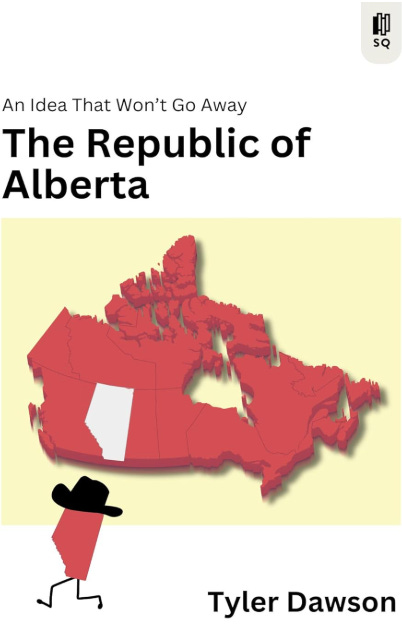
Sutherland Quarterly is pleased to announce its latest edition, Tyler Dawson’s exceptionally timely The Republic of Alberta: An Idea that Won’t Go Away:
What could the consequences be if Alberta turned its back on Canada?
In The Republic of Alberta, Globe and Mail journalist Tyler Dawson delivers the definitive history and analysis of Alberta’s long-simmering separatist movement. From its colonial roots and early resentment toward Ottawa, through the oil-fuelled grievances of the NEP era, to the rise of modern populism and convoy protests, Dawson charts a clear trajectory of Western alienation. Blending historical insight with contemporary reporting, he examines the thinkers, politicians, and cultural flashpoints that have shaped the separatist impulse. As Alberta Premier Danielle Smith courts separatist sentiment more openly than her predecessors, Dawson explores the uncertain future of a province increasingly questioning its place in Canada.
Buy your copy now or take advantage of this special offer for SHuSH subscribers: buy a subscription to Sutherland Quarterly (or treat a friend) and we’ll send you the Sutherland House book of your choice at no charge.
Launched in 2022, Sutherland Quarterly is an exciting new series of captivating essays on current affairs by some of Canada’s finest writers, published individually as books and also available by annual subscription—four great books a year, mailed to your door, for just $67.99. Subscribe now at sutherlandquarterly.com and we’ll immediately be in touch to send you the free book of your choice.
Thanks for reading. Please either:
Our Newsletter Roll (suggestions welcome)
Ian Coutts’ New Chapters, featuring new Canadian fiction
Banuta Rubess’s Funny, You Don’t Look Bookish, reviews five books a week.
The Bibliophile from Biblioasis, an independent publisher based in Windsor.
The Literary Review of Canada’s Bookworm, “your weekly dose of exclusive reviews, book excerpts, and more.”
Art Kavanagh’s Talk about books: Book discussion and criticism.
Gayla Gray’s SoNovelicious: Books, reading, writing, and bookstores.
Esoterica Magazine: Literature and popular culture.
Benjamin Errett’s Get Wit Quick, literature and other fun stuff
Lydia Perovic’s Long Play: literature and music.
Jason Logan’s Urban Color Report: adventures in ink (sign-up at bottom of page)
Anne Trubek’s Notes from a Small Press: like SHuSH, but different
Art Canada Institute: a reliable source of Canadian arts info/opinion
Kate McKean’s Agents & Books: an interesting angle on the literary world
Rebecca Eckler’s Re:Book: unpretentious recommendations
Anna Sproul Latimer’s How to Glow in the Dark: interesting advice
John Biggs Great Reads: strong recommendations
Steven Beattie’s That Shakespearean Rag, a newsy blog about books and reading
Mark Dykeman’s How About This: Atlantic Canadian interviews and thoughts on writing and creativity.
J. W. Ellenhall’s 3-Page Book Battles: Readers help her choose which of three random books to review each month.
Donald Brackett’s Embodied Meanings: “Arts music films literature and popular culture.”
This is a very moving account of your fathers life. He was certainly talented & very skilled with his hands in a way I greatly admire, but have not tried to emulate. I enjoy golf, & curled in Edmonton in my teens & can identify with his love for those sporting games. Connecting with your father comes easily for some boys, & more easily as men I think. Its a relationship that is central to our understanding of self for sure.
I love this piece.