

What the future holds
A conversation with Jane Friedman, Part 2
This is the 315th edition of SHuSH, the newsletter of The Sutherland House Inc. If you’re new here, press the button—it’s free:
Sutherland House is always happy to receive submissions of manuscripts or proposals for nonfiction books. If you are looking to get published, contact submissions@sutherlandhousebooks.com. Agents welcome, but no agent required.
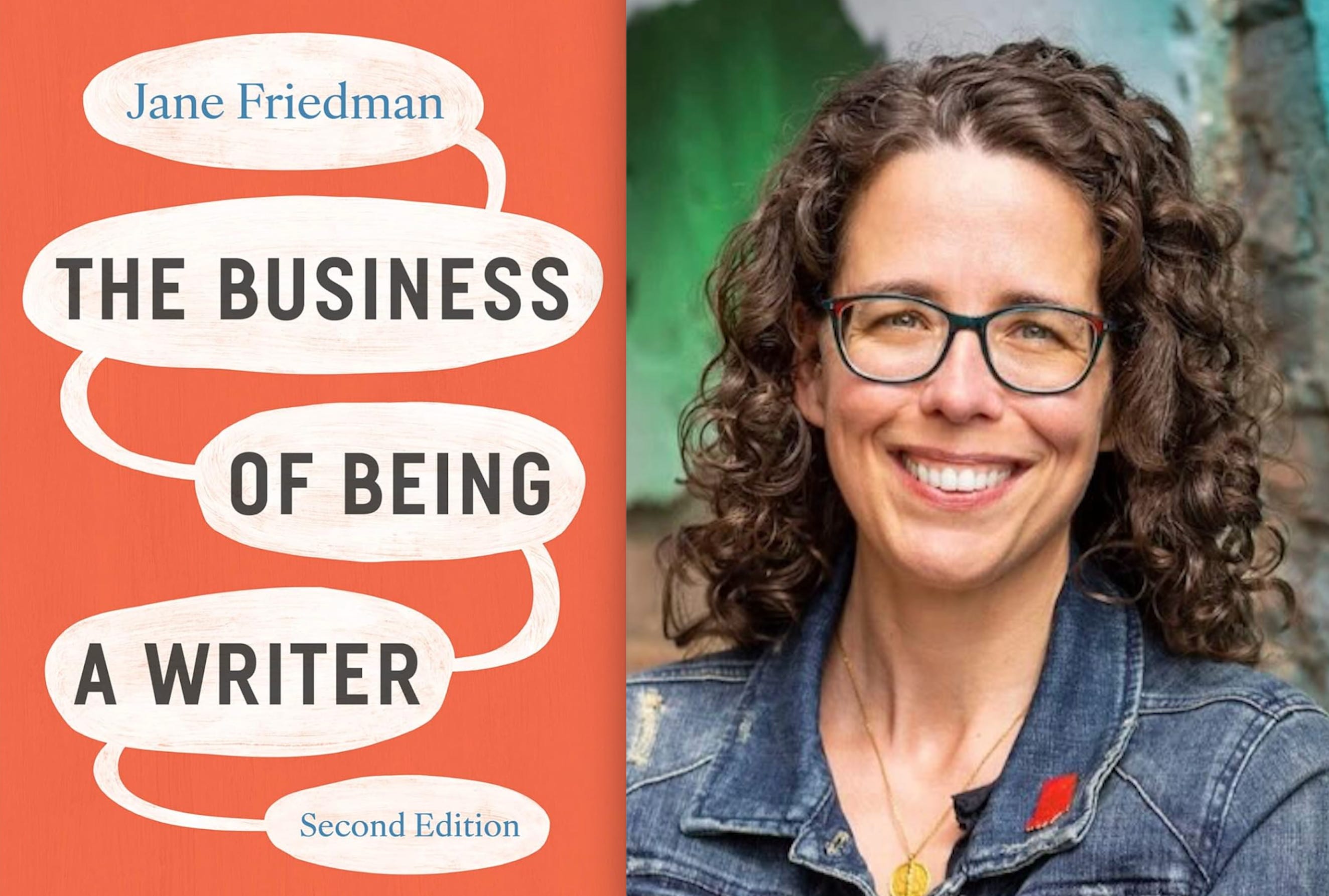
Last week we published the first half of our conversation with the great Jane Friedman. You can find it here and read more about her here and find her latest book, The Business of Being A Writer, Second Edition, University of Chicago Press (2025) here.
Having reviewed the major changes in book publishing over the last decade—the spectacular growth of hybrid and self-publishing, Amazon’s continued dominance, the fragmentation of the book-media marketplace, etc.—we now shift in this half of the interview to how the publishing world might unfold in the years ahead.
Ken: You touched on something that I think is another big change for publishers, and that’s margin compression. It’s really hard to make money these days. I know the Independent Book Publishers Association has noted the high cost of distribution—the fact that Amazon and the chains and the dominant distributor, Ingram, are able to squeeze so much of the value from the sale of every book, it doesn’t leave much for anybody else. And that’s motivating a lot of the direct-to-consumer behavior by publishers. I guess my question is where does it go from here? What happens when the traditional channels through which books are no longer profitable for smaller players, and only the big guys can make it work? We’re already seeing a lot of smaller publishers and self-published people doing a better job of selling direct to consumers. Are we going to wind up with two publishing worlds, eventually—how does it all play out?
Jane: Years ago—this might have been at least ten years ago, maybe even longer—Richard Nash [former publisher of Soft Skull Press], who, sadly, no longer in a key publishing position— he predicted that publishing would bifurcate. There’d be the really big guys, like the ones who are going to do the James Pattersons of the world, the celebrities, and the politicians. They’re gonna have that. That will continue. There will always be a role for that. And then you’re going to have, I think he might have called them enthusiast communities. You’re going to have these enthusiast areas of publishing that will do what they do just fine, and vibrantly, but it’s just going be on a smaller scale. And I don’t know that he specifically said direct-to-consumer, but I certainly think that’s a big piece of it. And I think he has been proven right. Certainly the publishers that are very focused on, “These are the people we serve, we have these shared values, we know how to reach them”—I find those publishers are in a much healthier position.
Are you familiar with AWP? It’s this big writing conference that’s mainly writing professors and MFA students, and all of the literary journals and presses you can imagine in the United States. A lot of nonprofits, but not all of them. And if you walk the book fair, which is like a thousand exhibitors, you start seeing there’s a lot going on that’s not just about book sales, but it’s about cultivating these communities, these enthusiast communities, and finding the support that’s needed directly from those people, rather than, “I gotta get this book into Barnes & Noble.” There’s more crowdfunding, there’s more subscription-based offerings, there’s more advertising and sponsorships—things that help bring in the money aside from “This book needs to sell X copies.”
Ken: So that just promises more change in the whole business model of publishing over the next while, as these things grow and people figure out how to do it well.
Jane: Yes.
Ken: Do you know of independent publishers who have shifted their business largely to direct-to-consumer? Do they exist?
Jane: They do. I don’t know how impressive they are to the people who work at Big Five publishers, because they’re so niche. But just across the river from me [in Covington, Kentucky], one of my former colleagues started Lost Art Press to do what he always wanted to do, and that’s make books that weren’t considered bookstore books. They were priced too high, the production values were too lush. Last time I talked with them, it’s been a while, they were doing about $3 million a year in business without going through Ingram and without selling through Amazon. It’s direct-to-consumer. And he’s like, “Next I’m opening a warehouse, because it’s just more efficient for me to do the fulfillment than have this third party do it and not do it as well as I could.”
Ken: Art books?
Jane: “They are woodworking books, for the most part. And he’s also looking at old titles that have been forgotten over the ages—like old French woodworking techniques that were published in the 1800s. He goes really deep, and people love it. They love it so much. They also have a shop that’s open to the public, and they do classes. It’s just a really neat operation.
Ken: It’s funny, those enthusiast communities. I come from the magazine world, and they were always a part of it. Everybody knows about the mass magazines, Vanity Fair, Better Homes and Gardens, Time, but there are all these small enthusiast titles like Wooden Boat, Fine Woodworking, needlepoint and quilting magazines, and they’re very good little businesses because they know their audiences and how to speak to a genuine community. A lot of them are still around, actually, unlike some of the big guys.
Do you follow the fantasy writer, Brandon Sanderson. He’s got a traditional publishing deal but he’s also self-publishing and he’s also his own distributor. He’s built himself up into a big publishing company just based on the Brandon Sanderson books and the Brandon Sanderson brand.
Jane: He put so much work into building the fan base that he has. I don’t recall what year he got started, but he spent countless years doing all the cons and fan events, building that business. I think he came more into the public consciousness when he had that incredible Kickstarter during the pandemic—the biggest one in history, $42 million. But that wasn’t his first rodeo. He already had a warehouse with full-time employees. He probably has a business that’s bigger than a lot of small presses. And he’s so prolific. I don’t know how many books he does a year, but it’s more than some publishers will do, and it just spills out of him. I think he really cares about the community he’s built. He has a lot of respect for them. And because of his volume of sales, he’s able to push back on his publisher and say, “Look, I really think we should do it this way.” And if they don’t, he’s like, “Okay, then I’m going to do it that way.” He was an early proponent of bundling formats at one price. Which is such a missed opportunity for a lot of publishers. I understand the challenge of being able to do that, but if you sell direct, the challenge decreases.
Ken: Is he a unicorn? Or ten years from now are we going to be talking about several hundred Brandon Sandersons?
Jane: I see this happening more and more on the self-publishing side, especially as they strike deals with traditional publishers, which gives them more visibility. The authors who are really shrewd, like Brandon Sanderson, are keeping all their options and paths open, so they’re not locked into something with a publisher that doesn’t give them room to do whatever they think needs to be done for their business. Colleen Hoover is another example. She built this amazing book festival, Book Bonanza, and she does merchandising. And then there are names you’ve never heard of. I wrote about one in my newsletter, Willow Winters, who does subscription boxes. I don’t think that’s a name a lot of people have heard of. She does a huge business. It’s mind-blowing.
Ken: What’s in the boxes?
Jane: Books, and some merch, a mug, maybe some stickers, some coffee, things she’s sourced pretty easily because she’s been doing this for so long. She has a full staff to help run the operation, including her husband in what I think is a chief operations role.
Ken: So what hasn’t changed in the last ten years?
Jane: The power of Amazon, I guess. It’s only become more entrenched. Although I think there are signs of some weakness. Bookshop.org is such a great story, a real David and Goliath story. I think they’ll continue to do well. But yeah, Amazon, that devil hasn’t changed much. Ingram’s power has stayed consistent, despite everything we’ve talked about.
Ken: Is that just because people feel they don’t have alternatives?
Jane: I can’t explain it. For authors, it makes a lot of sense to me, because all roads lead to Ingram if you want wide market distribution. You don’t really have a lot of options unless you’re some huge seller. For publishers, I think maybe they don’t want to make the investments that would be required to not deal with Ingram.
Ken: To distribute themselves?
Jane: Yeah.
Ken: There are so few alternatives.
Jane: But again, there are glimmers on the horizon—Stable Book, Asterism—there are people who are trying, and I think we may see some of those efforts pan out.
Ken: There doesn’t seem to be any decline in the number of people who want to write books.
Jane: Nope. And now AI is helping those who couldn’t write a book, who don’t have the stamina to do so.
Ken: What do you make of all the alarm about supposed declines in reading and reading ability? Anything that concerns you?
Jane: I guess I’d take the historical perspective. This complaint has been with us forever. I am sensitive to the fact that we have some really powerful distractions in our lives now that did not exist before—but this moral panic has been around for hundreds of years, really. There are signs that people are feeling the exhaustion from those distractions. They’re seeing the potential damage, not just to themselves, but maybe to family, friends, children. You see Australia has said no more phones at school. So I think we’re starting to see a little bit of movement that I hope is positive.
There was an article I shared recently, “Text Is King,” a Substack piece by a social psychologist. He pushed back against this idea that reading is in decline and that our reading levels are very poor. Now, I think there were some rainbow-and-unicorn elements in there. It’s easy to push back against his argument, and people did so in the comments. But for me, it was welcome, because there’s just so much doom and gloom around this issue. I don’t think we’re stuck here. I don’t think the decline is preordained. I think things can change. So we’ll see. I’m not pessimistic, I’ll put it that way. I think it can turn around. And I see plenty of reading going on in the fiction space.
If I have any worries, it’s more about serious nonfiction which, for the two of us, is what we care about a lot. I do have some concerns there. But it’s really more for the industry. It’s not because I think people will lose interest in reading serious nonfiction.
Ken: Looking at the Big Five, is that something that has or hasn’t changed?
Jane: The other Jane Friedman [former head of HarperCollins] once told me in an interview that you can’t turn around the Queen Elizabeth on a dime. And that’s kind of how I feel about those places. There have been some changes; they’re trying to maneuver. But I don’t feel like they’re that different. Not within the last ten years. We talked about some of the marketing and promotion shifts, but I still think there’s too much cookie-cutter marketing and promotion. The acquisition piece still feels a little strange to me. But I’m not on the inside hearing the conversations anymore. I just get the morsels that are shared with me from the outside.

Start the year informed
As a SHuSH subscriber, you are eligible for this special offer: buy a subscription to Sutherland Quarterly (or treat a friend) and we’ll send you the Sutherland House book of your choice at no charge.
Launched in 2022, Sutherland Quarterly is an exciting new series of captivating essays on current affairs by some of Canada’s finest writers, published individually as books and also available by annual subscription—four great books a year, mailed to your door, for just $67.99. Subscribe now at sutherlandquarterly.com and we’ll immediately be in touch to send you the free book of your choice.
Sutherland Quarterly is also pleased to announce its next edition, coming January 27, will be Richard Stursberg’s Lament for a Literature, a sweeping account of how English Canada once forged a confident literary culture—and how that culture has steadily collapsed.
For decades, books provided the country’s most searching reflections on its history, politics, and identity; they shaped the national conversation and anchored a shared sense of who Canadians were. Author and media executive Richard Stursberg traces how this ecosystem emerged, flourished, and then eroded. He follows the rise of a vigorous publishing industry in the 1960s and ’70s, the period when Canadian writers reached international prominence, and the subsequent decades in which foreign ownership, shifting cultural priorities, fragile institutions, and policy failures hollowed out the sector.
Clear, forceful, and grounded in deep research, Lament for a Literature shows what happens when a nation loses the infrastructure that sustains its stories—and outlines practical reforms, including a Canadian Book Law, to rebuild the foundations of a literary culture capable of renewing itself.
Thanks for reading. Please either:
Our Newsletter Roll (suggestions welcome)
Banuta Rubess’s Funny, You Don’t Look Bookish, reviews five books a week.
The Bibliophile from Biblioasis, an independent publisher based in Windsor.
The Literary Review of Canada’s Bookworm, “your weekly dose of exclusive reviews, book excerpts, and more.”
Art Kavanagh’s Talk about books: Book discussion and criticism.
Gayla Gray’s SoNovelicious: Books, reading, writing, and bookstores.
Esoterica Magazine: Literature and popular culture.
Benjamin Errett’s Get Wit Quick, literature and other fun stuff
Lydia Perovic’s Long Play: literature and music.
Jason Logan’s Urban Color Report: adventures in ink (sign-up at bottom of page)
Anne Trubek’s Notes from a Small Press: like SHuSH, but different
Art Canada Institute: a reliable source of Canadian arts info/opinion
Kate McKean’s Agents & Books: an interesting angle on the literary world
Rebecca Eckler’s Re:Book: unpretentious recommendations
Anna Sproul Latimer’s How to Glow in the Dark: interesting advice
John Biggs Great Reads: strong recommendations
Steven Beattie’s That Shakespearean Rag, a newsy blog about books and reading
Mark Dykeman’s How About This: Atlantic Canadian interviews and thoughts on writing and creativity.
J. W. Ellenhall’s 3-Page Book Battles: Readers help her choose which of three random books to review each month.
Donald Brackett’s Embodied Meanings: “Arts music films literature and popular culture.”
This is heartening and consistent with my own sense of the doom and gloom around the so-called decline in reading: "I don’t think we’re stuck here. I don’t think the decline is preordained. I think things can change. So we’ll see. I’m not pessimistic, I’ll put it that way. I think it can turn around. And I see plenty of reading going on in the fiction space." 🙏 Jane Friedman & Shush.